In Venice, glass is part of the city’s identity—and this September, it took center stage once again. The tenth edition of The Venice Glass Week took place September 12–20, 2026, across Venice, Murano and Mestre, celebrating the people, ideas and craftsmanship that keep artistic glass alive.
For those of us who love authentic Murano glass beads, the festival offers a wonderful reminder: even a small bead can hold an extraordinary amount of artistry. And the glass rods, the avventurina each hold centuries of passed on knowledge, and this knowledge like the trees that hold up Piazza San Marco are all an absolute requirement before the first torch is lit by our bead makers.
A celebration of tradition and new ideas
The 2026 program included more than 200 events, ranging from exhibitions and installations to talks, visits and workshops. Its focus brought Venetian glass making traditions into conversation with contemporary research and design.
That connection matters. A living craft needs both the knowledge passed down through generations and the imagination of artists willing to try something new. Color, light, texture and form give glassmakers endless possibilities—and give jewelry designers endless reasons to keep creating.
Murano glass lights up St. Mark’s Square
One particularly beautiful example was Murano Illumina il Mondo, inaugurated during the festival’s opening weekend. Twelve new artist-designed chandeliers, made in collaboration with Murano glass furnaces, were installed beneath the arches of the Procuratie Vecchie in St. Mark’s Square.
The installation is scheduled to remain on view through November 1, 2026, extending the celebration beyond the festival itself. Each chandelier brings together an artist’s vision and the skill of a Murano furnace.
My favorite is this this one below by Gianni Seguso. It is whimsical but the maestro in the furnace brings the birds to life.
For bead lovers, there is something familiar in that partnership: an idea becomes possible because an artisan understands how glass behaves under heat and how to shape it into something beautiful.
Looking back to understand what comes next
The programme also included the exhibition “1948–1958. Murano Glass and the Venice Biennale” at Le Stanze del Vetro. The Fondazione Giorgio Cini’s Glass Study Centre offered opportunities to explore archival drawings, designs, photographs and documents.
These records preserve more than finished objects. They help tell the story of the decisions, experiments and creative relationships behind them. Looking at the history of glass can give us a fresh appreciation for the pieces we choose today.
The art you can hold in your hand
The festival celebrates artistic glass in many forms. Here at VenetianBeadShop, our connection to that world is through beads and the makers behind them.
For more than 33 years, we have worked directly with bead makers in Venice and Murano, building relationships with artisans and their families. We have also collaborated on our own bead designs, combining traditional techniques with new colors and ideas.
A handmade bead asks you to look closely. Notice the way transparent glass catches the light, the glow of enclosed gold or silver foil, or the movement of a pattern across its surface. Small differences in size, decoration and color are part of handwork; no two handmade beads are exactly alike.
When you use these beads in jewelry, your own choices become part of their story.
Bring a little Venice to your next design
You do not need to make a complicated piece to enjoy beautiful glass. Start with one bead you love and build around its colors.
Let a gold foil heart become the focal point of a simple necklace.
Pair rich red or cobalt beads with a few complementary accents for earrings.
Choose patterned beads for a bracelet and repeat one color to bring the design together.
Mix transparent glass with foil-lined beads to explore different effects of light.
These are our jewelry-making suggestions, inspired by a celebration of glass and craftsmanship. Let the materials guide you, and leave enough space in your design for their details to be seen.
Keeping the story alive
The Venice Glass Week reminds us that glass making is an ongoing creative tradition. Its future depends on people who make, study, collect and appreciate the work. It depends on the Masters who walk into the furnace each day with their inspiration and strength to carry on the tradition.
Thank you for sharing our love of authentic Venetian and Murano glass—and for giving these beads another chapter in the jewelry you make, sell and give
We do not sell beads, we sell romance, art and history.
There are places where inspiration seems to be everywhere you look.
Venice is certainly one of them.
During The Venice Glass Week, you begin to see the city a little differently.
Rather than just canals, bridges, and old buildings, you notice the glass in windows, exhibitions, workshops, and galleries.
Murano Beads appear in the hands of makers, adding a local highlight.
The 2026 edition was particularly special because it marked the 10th anniversary of The Venice Glass Week. Additionally, from September 12–20, Venice, Murano and Mestre hosted more than 200 events. These events celebrated glass through exhibitions, installations, demonstrations, workshops, talks and guided tours.
I spent some time exploring this year’s events, and as someone who is especially interested in beads, I naturally found myself looking beyond the finished pieces to the materials and techniques behind them.
And that is what I wanted to share with you.
Where the beads begin
One of my favorite sights was something that might seem fairly ordinary if you don’t work with glass.
Glass rods.
Lots and lots of glass rods.
But when you work with beads, a collection like this is anything but ordinary.
There are colors everywhere — transparent, opaque, delicate pastels, intense blues and reds.
Additionally, greens, yellows, blacks, and whites are difficult to describe, yet they are immediately recognizable once you see them.
And then there are the shapes.
Some rods are straight and orderly. Others have been bent, pulled or worked in some way before they’ve even become part of a bead.
Looking at them reminded me that a finished Venetian bead is really only the end of a much longer story.
First there is the glass.
Then there is the heat.
The tools.
The technique.
And, perhaps most importantly, the person making it.
The beauty of the workbench
I could happily spend far too much time looking at a glassmaker’s workbench.
There is something wonderful about seeing the evidence of the process rather than just the finished object.
Tools sitting where they were last used.
Small pieces of glass waiting to be incorporated into something else.
Containers full of color.
And everywhere, possibilities.
This is one of the things I love about glassmaking.
There is an incredible amount of skill involved, but there is also experimentation.
A beadmaker starts with an idea, but the glass has a say in what happens next.
The temperature changes.
The colors react.
The shape evolves.
And sometimes the little surprise that wasn’t planned becomes the best part.
Venice Glass Week: looking at glass from every direction
One of the wonderful things about Venice Glass Week is that it isn’t simply a series of exhibitions.
The program brings together exhibitions and installations with demonstrations, workshops, guided tours, talks and other events. The 2026 program stretched across Venice, Murano and Mestre.
There was plenty for anyone interested in the history of glass.
It covers 1948–1958 Murano Glass and the Venice Biennale.
Additionally, LE STANZE DEL VETRO hosted an exhibition on the period’s importance for Murano glass and the Biennale.
Nevertheless, there was also a strong focus on what is happening now.
That balance is important.
Venetian glass has an extraordinary history, but it isn’t simply something preserved in a museum.
Artists and glassmakers are continuing to experiment with it, reinterpret it and find new ways to work with an old material.
And then there are the beads
Of course, this is the part that really inspires me.
One of the 2026 events was Glass Beads from Around the World, an exhibition in Mestre featuring finalist beads from previous editions of Your Bead for Venice. The exhibition brings together work by glass bead artists from around the world who have been inspired by Venetian techniques and traditions.
Venetian beadmaking is a very specific tradition, rooted in a particular place and history — but its influence doesn’t stop at the edge of the Venetian lagoon.
Beadmakers around the world have learned from these techniques, adapted them and made them their own.
And that brings us to one of the projects I was especially happy to see connected with Venice Glass Week.
Your Bead for Venice
Your Bead for Venice is an international competition celebrating Venetian glass beadmaking and the artists who continue to be inspired by it.
The 2026 competition invited beadmakers around the world to submit a bead inspired by Venetian beads or Venetian glass techniques. The finalists’ work is being exhibited during Venice Glass Week.
There is something particularly nice about the idea of one bead carrying a connection to Venice.
It doesn’t have to be an exact reproduction of an historic bead.
It can be a new interpretation.
A different color combination.
A familiar technique used in a new way.
A personal response to Venetian glass.
In fact, the 2026 competition introduced a special Venetian Star prize recognizing a bead that most closely reflects traditional Venetian design, techniques and Venetian glass. The judging also considered three areas: connection with Venice, quality of the bead and technique used.
And that’s really what makes the project interesting to me.
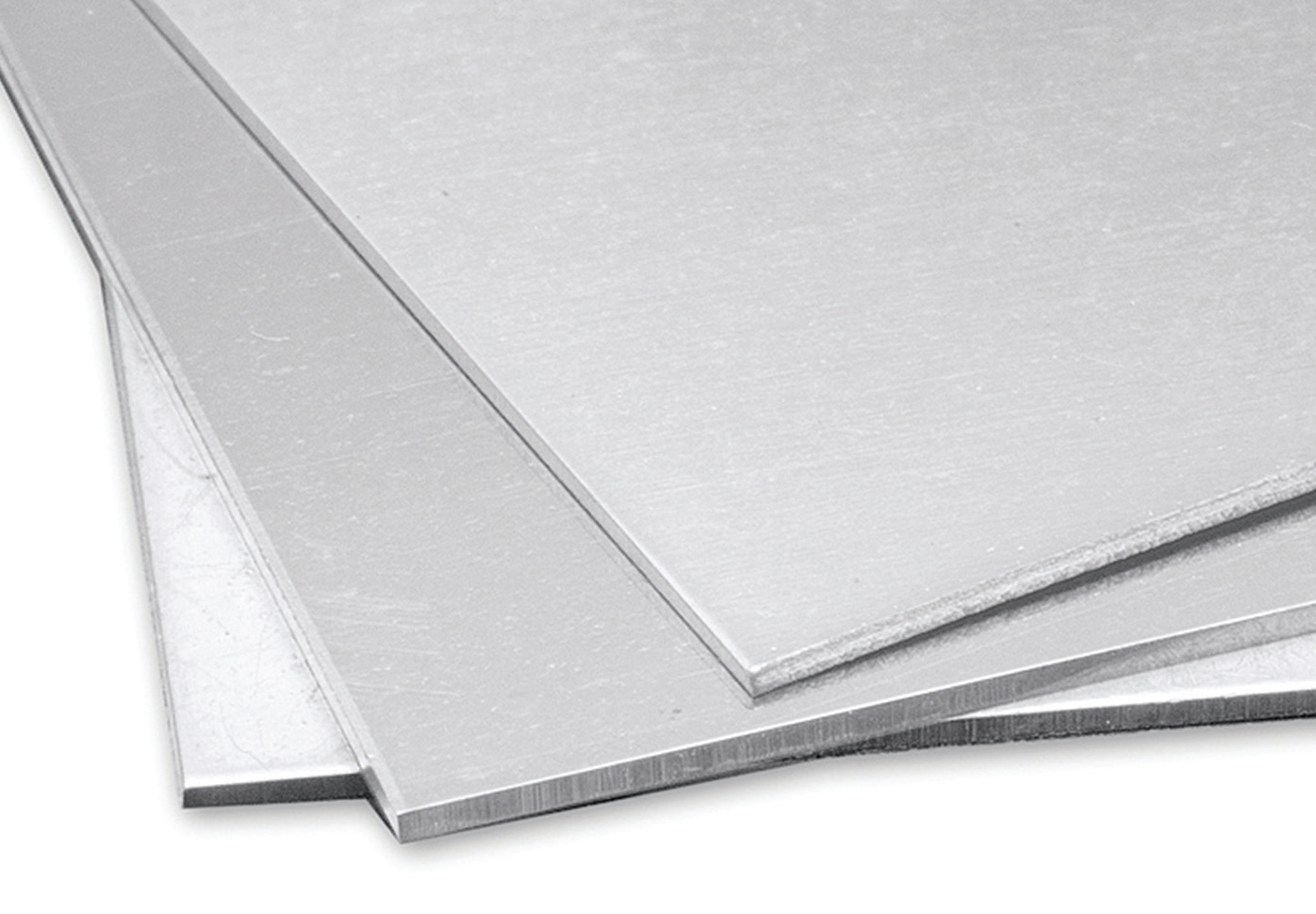
Sterling silver alloys typically contain about 7.5 percent copper, an addition that not only provides strength to the otherwise pure silver, but also helps the alloys to tarnish fairly quickly—a traditional frustration for jewelers and consumers alike. In addition, both copper and silver readily absorb oxygen when in a liquid state, leading to issues with firestain and gas porosity that has confounded many a caster.
In recent years, metallurgists have discovered that replacing some of the copper content with deoxidizing elements, such as zinc and silicon (in casting alloys) and germanium (in alloys geared toward fabrication), increases the resistance to both firestain and tarnish. This has led to the creation of several proprietary de-ox alloys now on the market. They all resist tarnish and offer a whiter, brighter look than found with traditional sterling. In addition, several help to protect against firestain and can be easily fused (thus avoiding solder).
Sounds great, right? But swapping out some of that copper for other materials means that these alloys don’t always behave in the same way that traditional sterling does. To help you get to better know these alternative silver alloys, we’ve asked jewelers and metallurgists to explain how these alloys are different, and why they may warrant a place in your shop.
Getting to know you
When many jewelers think of deoxidized silvers, the first thing that comes to mind is the tarnish resistance they offer. Metallurgists are quick to point out, however, that tarnish resistant is not the same as “anti-tarnish” or “tarnish-proof.”
“All de-ox sterling silvers will eventually tarnish,” says Dr. Shan Aithal, corporate metallurgist at Stuller Inc. in Lafayette, Louisiana. “It’s just a matter of how slowly.”
Among all the noble metals, silver is chemically the most reactive and readily combines with sulfur and chlorine, main elements that cause tarnish in traditional sterling silver. The addition of copper in these alloys further decreases the tarnish resistance by adding oxygen to this list. When the silver and copper in the alloy react with sulfur in the atmosphere, silver and copper sulfides are created at the surface of the metal.
Adding de-ox elements to a sterling silver alloy not only reduces the amount of copper in the alloy, but can create “a passive oxide surface to prevent or at least reduce the penetration of oxygen into the alloy, so less copper oxide is the result, “says James Binnion of James Binnion Metal Arts in Bellingham, Washington.
The protective oxide layer is a reason why many bench jewelers initially turn to these de-ox alloys. Ruthie Cohen, a jeweler, educator, and the owner of Timeless Jewelry Designs in Arden, North Carolina, likes to create her silver pieces using Stuller’s Sterlium Plus de-ox alloy primarily because of its tarnish resistance. She says that finishing is much easier with the alloy due to the fact that pieces stay shiny longer. She also points out that since most customers aren’t excited about the care and cleaning of jewelry, eliminating the need to wipe down pieces is a definite plus.
Additional Resistance
Much like adding germanium to sterling fabrication alloys can help them resist tarnish, adding zinc and silicon to casting alloys can help protect against firescale. The bane of many a silversmith, firescale frequently appears on sterling silver when heat is applied in the presence of oxygen, leading the copper to turn a reddish-purple color. While it can occur while the alloy is being heated at the bench, it normally happens during the casting process, where it can form not only on the surface, but also deep within the metal, waiting to be discovered during polishing.
“After casting, sterling silver will have a black coating on the surface,” explains Aithal. “It comes off after pickling, but it may leave a hint of pink at the surface. Pickle will remove that copper oxide on the surface, but not on the inside. If copper oxides were colorless like the oxides of silicon and germanium, we would not be discussing firescaling of sterling silver at all!”
When it does occur, the only option is to remove it, usually by polishing or filing, but even then it involves having to remove material down to the root of the firescale, which in some cases can be substantial.
It’s no wonder then that firescale has turned off many a jeweler to traditional sterling silver. It was one of the main reasons why Ronda Coryell of Ronda Coryell Designs in Albuquerque, New Mexico, stayed away from the metal, preferring to work with gold and platinum.”Sterling is what sterling is, and it will have firescale,” she says. “I hate firescale. It takes so much longer to make a piece.”
When some of the de-ox alloys first started coming out, she tested them in her shop. “They cast beautifully,” says Coryell.
“Because of the addition of these elements, there are good things we achieve (tarnish resistance), but also some bad things.” -Dr. Shan Aithal, Corporate Metallurgist, Stuller INC.
Let’s get together
Another thing that appeals to Coryell is the ability of some of these de-ox fabrication alloys to fuse to themselves as well as other metals. “Argentium can be fused to almost anything that has a higher melting temperature, including steel, “she notes.
Although fusing traditional sterling silver is technically possible, many experts agree that it’s not practical in a typical workshop. “It’s very tricky,” says Aithal.”You need high temperatures, but you also have to prevent it from oxidizing. It was something best left to the experts. But now with these alloys, people are finding it very easy to fuse.”
When these de-ox silver alloys are heated, they start to sweat. The liquid that comes out creates a bond, allowing two pieces to fuse without oxidizing. While soldering is also possible with these alloys (and many suppliers offer solders geared specifically for them), fusing is often seen as the more practical option since it’s fast and requires no cleanup.
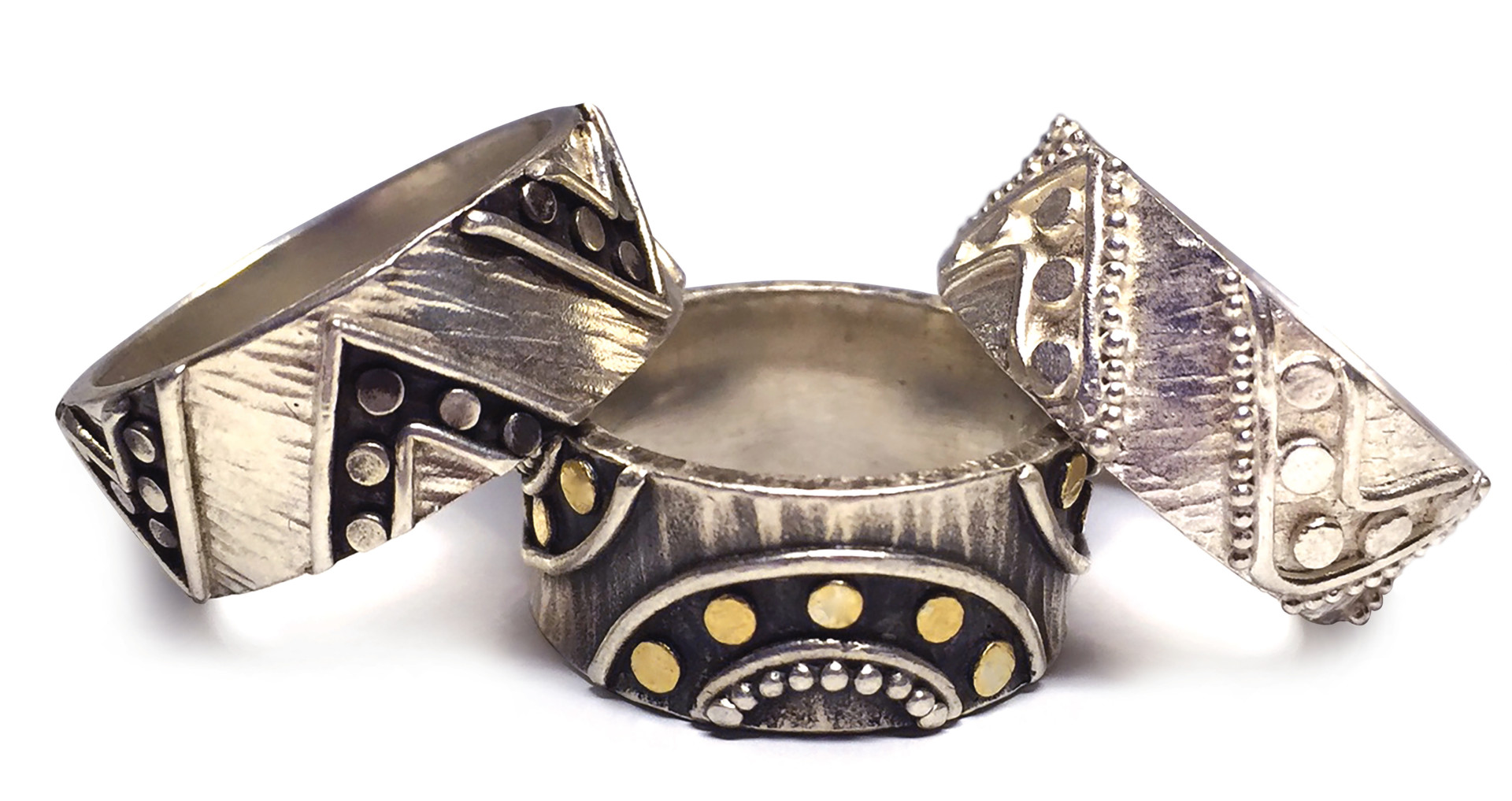
One of the first projects Rita Marie Ross, an artist and metalsmith in Austin, Texas, tackled when she started working with Argentium was to make three identical rings in the metal. “I sat them down on top of each other, heated them up, and fused them together,” she says. “It happened so fast and perfect—that’s a wow factor! Once they’re fused, they won’t move. And the beauty is that there’s no solder so you don’t have to clean anything.”
“It happened so fast and perfect- that’s a wow factor! Once they’re fused, they won’t move. And the beauty is that there’s no solder so you don’t have to clean anything.” -Rita Marie Ross
These alloys’ ability to be fused also opens up the door to easier granulation. Unlike with fine silver granules, which have to be heated to an exact temperature or risk being melted, these alloys have a broader temperature range that allow the de-ox granules to fuse long before melting is a possibility.
However, Binnion points out that fusing these alloys can result in weakening the metal. “When you heat it up to fuse, you’re growing the grain structure radically, making it a less strong material,” he warns. “If you’re doing a lot of fusing, the material can get weaker and be prone to breaking. It’s a tradeoff you have to make with these alloys.”
Working it over
Even with all the great properties these de-ox alloys offer, many jewelers may be hesitant to try them because they’ve heard that the fabrication alloys can’t be worked in the same way as traditional sterling silver. However, it’s not too hard to adjust from traditional sterling to a de-ox alloy; you just need to be aware of the differences and how to accommodate for them.
A Hard Time. The addition of elements such as germanium, zinc, and silicon reduces the mechanical strength of the de-ox alloys. “Some of these alloys remove all the copper or at least the vast majority of it,” says Binnion. “The problem with this is that the copper addition is what gives sterling its strength. This means all the de-ox alloys are soft when compared to standard sterling in the as cast, annealed, or work-hardened condition.”
While these alloys may start out softer than sterling silver, they can be precipitation (or age) hardened to improve their mechanical strength. Since each alloy has its own unique formulation, it’s best to follow the alloy manufacturer’s instructions for age hardening.
The Flux Factor. Many of these alloys can be easily fused, but flux is recommended to avoid the formation of a superficial oxide layer. In addition to keeping the joint clean for fusing, the flux can serve as a helpful indicator for knowing when the piece is approaching the correct temperature to fuse.
When Ross is fusing a piece of Argentium, she keeps an eye on both the color of the metal she’s heating as well as the flux that she’s applied to the joint. “You have to look closely when you’re heating
it because it’s not as blatant as with solder, where you see a line of silver flowing,” she says. When the metal starts to turn orange and the flux turns into what she can best describe as “dancing droplets,” she knows it’s time to pull up her heat.
While flux is only necessary on the joint you’re fusing, if you’re doing multiple fusings on a piece, Coryell recommends applying flux to the entire piece.
Support Is Critical. The same elements that improve these alloys’ tarnish and firescale resistance can also have unintended consequences. “Because of the addition of these elements, there are good things we achieve (tarnish resistance), but also some bad things,” says Aithal. For one, a piece needs to be fully supported when it is being heated.
“When you’re annealing at the bench, inside of the piece some areas can become liquefied, and therefore the metal loses its strength,” explains Aithal. “You have to support the piece, otherwise it can sag and crack.” Luckily, that support can be as simple as a charcoal block.
“It’s really an issue of knowing what you want to do. Then find and learn everything about the best material for your needs so you can produce the best quality product with it.” -James Binnion
A Hands-Off Approach. Many jewelers experienced with traditional sterling will have to learn to wait a bit longer after heating a de-ox alloy. While sterling silver is also susceptible to cracking when red hot, the de-ox alloys tend to take longer to solidify, and they remain fragile for longer: If you handle them or apply pressure too soon, they could crack.
How much longer to wait will ultimately depend on the alloy and type of piece being heated, but many experts say that it’s usually not more than a difference of a few seconds. And, when in doubt, there’s no harm in letting the item cool a bit longer to be safe.
Keep It Clean. It’s recommended that when working with de-ox silver alloys, you use a dedicated set of polishing wheels for the metal. This prevents cross contamination from other metals that can get deposited on the silver and disrupt the formation of the protective oxide layer.
And remember: No alloy is perfect. “It’s really an issue of knowing what you want to do,” says Binnion. “Then find and learn everything about the best material for your needs so you can produce the best quality product with it.”
Empowering Creativity: How Small Businesses in Vertical Markets Support Artists and Strengthen Communities
Authentic artistry risks being overshadowed by large-scale corporations and unseen online, dwarfed by the Amazons, the Googles and visibility certain only by the dollars spent. And online stores such as Temu aggressively use the terms “Murano Glass” with impunity, even going so far as to use “VenetianBeadShop” in their Google Ads. Yet, nestled within the fabric of local economies lies a powerful force that keeps creativity, craftsmanship, and culture alive — small businesses dedicated to this market focused on artists.
A vertical market—one that specializes in serving a niche industry—offers unique opportunities for artisans to thrive. Whether it’s handcrafted jewelry, bespoke furniture, ceramics, or glass art, these specialized businesses act as a vital bridge between independent artists and customers who value authenticity, quality, and tradition.
How Vertical Market Small Businesses Champion Artists
Venice inspires art just from the everyday scenes enhanced by light and water.
Unlike generic retail giants, small businesses operating within a vertical market understand the nuances of the craft they represent. They don’t just sell products-they curate stories, preserve heritage, and foster relationships with artisans. As we say here at VenetianBeadShop, we don’t sell beads, we sell Romance, the Romance of Venice. We sell history, the history of glass making first in Venice and then moved to Murano.
Direct Support to Artists We work closely with individual artists, offering fair compensation, consistent large orders, and exposure that artists struggle to secure on their own. This partnership allows artists to focus on what they do best, creating without being overwhelmed by the challenges of marketing, logistics, or international sales.
Preserving Traditional Craftsmanship Murano glassmaking is rooted in centuries-old traditions. Vertical market businesses ensure these art forms continue to flourish by providing sustainable demand and educating consumers about the value behind each handmade piece. VenetianBeadShop provides DIY projects complete with printable instructions to aid our customers in this craft.
Platform for Unique, Handcrafted Goods In a world saturated with identical, mass-produced items, vertical market businesses highlight the beauty of one-of-a-kind creations. They help customers appreciate that behind every product is a human story – a skilled artist, a cultural tradition, and hours of dedicated craftsmanship. We have been online since 1998 first as Global Gift Shop on Yahoo Stores and then as VenetianBeadShop.com. We have participated in countless shows across the US, in New York, Los Angeles, Portland, Seattle, Tucson, Las Vegas, Milwaukee and more. The quality of our beads and jewelry shine brightly in shows against mass produced items and shows convert to life-time customers.
Strengthening Communities Through Art
Basi Beads featuring 24k Gold Foil with tiny hand painted flowers and slices of Millefiori
The impact of supporting artists extends far beyond the individual creator. Small businesses focused on artisan markets play a crucial role in enriching local and global communities:
Economic Impact By sourcing directly from artists, these businesses keep money flowing into local economies—whether that’s a glassblower in Murano, a painter in New Mexico, or a ceramicist in North Carolina. This fosters economic resilience and creates a ripple effect of opportunity within artisan communities.
Cultural Exchange & Preservation Every handcrafted item carries cultural significance. Small businesses serve as custodians of these traditions, introducing customers to global artistry while helping preserve endangered crafts for future generations.
Our Role: Bridging Artistry and Appreciation
At VenetianBeadShop we are proud to be part of this vertical market that champions artists and uplifts communities. We don’t see ourselves merely as retailers we are partners in creativity, advocates for tradition, and storytellers for the artisans we work with. We create new beads inspired by artist, such as Klimt, Monet, or the amazing Palazzo along the Grand Canal such as Ca’d’Oro whose façade was covered in real gold. We use 24kt Gold Foil and .925 Sterling Silver to enhance our beads.
By connecting customers to authentic, handcrafted pieces, we ensure that:
Artists are able to make a living doing what they love. Many of our artists are 2nd and 3rd generation.
Customers experience the joy of owning something truly unique and meaningful.
Communities — both local and international — benefit from sustainable, culturally rich commerce.
Why It Matters
In supporting small businesses like ours, customers aren’t just making a purchase — they’re making a difference. They’re voting for craftsmanship over mass production, tradition over trend, and human connection over corporate anonymity.
As we continue to grow within our niche, we remain committed to empowering artists, preserving heritage, and enriching communities through the beauty of handmade art.
Together, we can ensure that creativity continues to flourish — one piece at a time.
How VenetianBeadShop, Murano Artisans, and Small Businesses Create a Community of Creativity
In a world dominated by mass production and corporate giants, the true value of handmade artistry can sometimes be overlooked. But at VenetianBeadShop, we believe in something far more meaningful — a business built on collaboration, craftsmanship, and community.
As a small business operating in the vertical market of artisan-made products, we proudly work hand-in-hand with our talented bead makers in Murano and Venice, supporting not only centuries-old traditions but also the families and futures of the artisans behind every bead.
Supporting Artisans: More Than Just Business – It’s Family
Our relationship with Murano’s glassmakers goes beyond transactions — it’s a partnership rooted in respect and mutual success. Each bead we offer is a testament to the skill passed down through generations of Venetian artisans. But behind the shimmering glass and intricate designs lies something even more important: …People.
By collaborating directly with our bead makers, we help sustain numerous families. Every order placed contributes to everyday life in Venice — from sending children to school, buying birthday presents, to ensuring these artisans can continue doing what they love. It’s not just about preserving a craft; it’s about enriching lives and keeping vibrant communities thriving on the islands of Murano and Venice.
Empowering Our Customers: Creativity That Pays Forward
The beauty of this vertical market is how far its impact reaches. Once these exquisite, handmade beads arrive at VenetianBeadShop, they begin a new journey — into the hands of our customers, who transform them into unique pieces of jewelry.
Our customers — many of whom are independent artists, hobbyists, or small business owners themselves — take these authentic Murano Glass beads and create jewelry that tells a story. Whether they’re selling at local craft fairs, boutiques, or online shops, they’re turning creativity into opportunity.
For many, this isn’t just a passion project. The jewelry they craft and sell might:
Pay for their child’s dance lessons.
Cover the cost of baseball camp.
Help with family expenses or fund a well-deserved vacation.
Or simply bring the satisfaction of turning artistry into income.
It’s a win-win, all the way through the market — from the glass furnaces of Murano to craft tables across the world.
Spreading Joy Through Handmade Beauty
The impact doesn’t stop there. Each piece of handmade jewelry our customers create carries forward the legacy of Murano artistry. When someone buys or receives that jewelry as a gift, they’re not just getting a beautiful accessory – they’re receiving a piece of history, tradition, and heartfelt craftsmanship.
Gold Foil, Silver Foil and White Gold Foil Round Murano Glass Beads
It’s this chain – from artisan, to small business, to creator, to customer – that makes what we do at VenetianBeadShop so special.
Why Markets Like Ours Matter
Large corporations may dominate the headlines, but it’s small businesses within niche vertical markets that fuel creativity, preserve culture, and foster community connections. At VenetianBeadShop, we’re proud to be part of this ecosystem:
We support artisans and keep traditional crafts alive.
We empower creators to build businesses and express themselves through handmade jewelry.
We help spread joy and beauty to those who wear or gift these creations.
Every bead has a story. Every piece of jewelry continues that story. And every purchase supports real people — from Venetian artisans to families in communities across the globe. As we say here at VenetianBeadShop, we don’t sell beads, we sell romance, we sell history, we sell creativity.
Together, We Keep Artistry Alive
When you choose to buy from a small business like VenetianBeadShop, you’re not just buying a product — you’re investing in a network of creativity and human connection.
You’re helping a Murano glassmaker keep his furnace burning. You’re giving a jewelry maker the tools to grow her craft business. You’re bringing joy to someone who cherishes a handmade gift.
That’s the power of supporting artisan vertical markets. It’s a beautiful cycle — one we’re honored to be part of, and one that continues to thrive thanks to customers who believe in the value of handmade.
Let’s keep this chain of creativity, community, and craftsmanship strong — one bead at a time.
At the moment there is no reason to panic. We will not increase prices until we are forced to pay these tariffs. We have a huge stock of beads already in our bead shop. Maybe it is not the beads that you currently use, but there are plenty of beautiful choices.
When we see the tariffs on an incoming shipment, we will advise you. However at that point, the prices will increase proportionally, so my advise to you is shop now. I have hopes that this is like a child’s temper tantrum and will quickly be removed, forgotten. Currently, I see that the EU of which Italy is a member will be 25%. This is not viable and hurts everyone.
The existing tariffs were negotiated over many years and have always been to protect American made products, like the importing of brooms was prohibited. That was because in years back, the school for the blind made them. Now that is ridiculous as there are no schools for the bind making brooms.
In case you haven’t been following the news, here is a summary
You may have heard that a new set of tariffs—basically, taxes on imported goods has been proposed. These would apply to everything the U.S. brings in from other countries (yes, even our beautiful Murano Glass Beads) with even higher rates on imports from places including, the EU of which Italy is a member.
So, what does this mean for everyday people?
Higher Prices: Since tariffs make imported goods more expensive, that cost gets passed on to consumers. Experts estimate that the average American household could end up spending an extra $2,000 to $3,800 per year if these tariffs go into effect.
Inflation Concerns: With prices going up, inflation is likely to rise too. That means the money in your pocket doesn’t go as far, especially for essentials.
Risk of a Recession: Some big financial institutions are warning that these tariffs could slow down the economy enough to trigger a recession by the end of 2025.
Possible Trade Tensions: Other countries might respond with tariffs of their own, which could disrupt international trade even more and cause ripple effects in supply chains.
Why are tariffs being proposed? Supporters say they’re a way to protect American jobs and businesses by encouraging more U.S.-made products. Critics, though, are concerned that the broad nature of these tariffs could end up doing more harm than good—especially for consumers and small businesses.
As things develop, we’ll all be watching closely to see how it plays out and how it might affect prices, shopping choices, and the overall economy. So I suggest you expand your bead horizon and make good use of our existing stock of beautiful, unique and high quality beads and we will fact the tariff when we see them. https://www.venetianbeadshop.com
Sorry, we are all prisoners of this egregious actions by the US. In case you want to read more about tariffs, the complexity and the harmonized tariff schedule: https://hts.usitc.gov/
Unfortunately, we work with these codes each time we ship beads, supplies or jewelry out of the US. We must have the codes correct so that your package does not get returned.
In our last Blog we talked about my mentor and dear friend Franco Albertini who owned the furnace La Fenice in Murano. The furnace was in the gardens of the palazzo da Mulla one of the last remnants of Venetian villas built in Murano in the 15th and 16th centuries.
Today WAVE is breathing new life into the historic furnace with 15 workers and the owner Roberto Beltrami. Beltrami is not from Murano and rubs a few people the wrong way that he has the money necessary and talent to run a furnace. From my view point, he is employing 15 workers, he has studied, first science and then glass blowing.
He went on to open a glass furnace in 1859in Murano along with Lorenzo Radi and produced the mosaic glass for the altar screen at Westminster Abby. He and his friend Austen Henry Layard founded Compagnia Venezia Murano and together they changed the face of business becoming the first glass factory to employ a number of skilled workers (glass blowers) to mass-produce glass for export.
While Murano had been a glassmaking centre since the European Middle Ages, in the 19th century the industry was revitalized by Salviati and others who adapted traditional skills to modern manufacturing processes. Salviati’s firm helped promote glass as an accessible art form and encouraged the public to collect glass ornaments and tableware. This effort rekindled the interest and the furnaces of Murano.
So as a number of local glass blowers whine about Beltrami’s money and belittle that he is not a “Muranese”, many of these are the same glassblowers who happily fly to the US, Japan or elsewhere to teach the secrets of making Murano Glass lining their pockets with money and enjoying being treated as a celebrity and leaving the story of Murano Glass with others who are NOT “Muranese”.
I applaud him for creating jobs in Murano, for continuing the art form. And I can’t think of a more appropriate place than the historic La Fenice on Fondamenta Mula. I believe Franco would be happy knowing that the fires still burn.
If you are going to Murano, visit his website and you can schedule a tour or even a glass lesson.
It is an online magazine that you can subscribe to for free and enjoy stories of all the regions of Italy, places to visit, history of the area. And for me above all are the beautiful photographs.
And read Brenda’s article on her view of the history of Murano and the issues of today. Visit our website to browse our Murano Glass Home Decor
Watching these guys makes it look like play. Watch as they make authentic mouthblown Murano Glasses. Glass blowing is teamwork, the Maestro (the one who sits at the bench) and his servente, basically anyone not sitting at the bench. In more complicated pieces there may be 4 or 5 who comprise the Piasa, in dialect or Piazza in italian. Watching a Piazza in action is like watching a ballet, just with glass heated to about 1900 Fahrenheit being swung around.
Father and son work on this team in a classic family business in Murano. The father owned his own furnaces until he retired and the son was a Maestro at some of the most well known furnaces in Murano. Additionally, they make some of our most beautiful beads. As you see them here working they do not have a traditional furnace, they work with Cotisso (shown below) which is chunks of glass which have been premade and they just need to melt it in order to blow the glass. The chunks are bought from the same Murano furnace that makes canes for our beads. It just saves a step in the process.
Their years in the furnace making vases, wine glasses, animals, all the things in the furnace have given them the experience to make even our small beads. We all love their outside spirals beads shown below. They are the specialty of the son. His work in the Venini furnace taught him all about control of the glass. They are so perfect they look like a machine made them.
You are never too old to love Venetian Beads. We began as the “bubble” of COVID when our lovely ladies couldn’t go to mass, couldn’t go to Bingo, nor the hairdresser couldn’t go to any of the things that keep them “young”. And 3 years on, they still come to our beadshop every Wednesday afternoons to count beads.
Rina, whose family is from Pederobba, Italy, an agricultural very tiny town on the banks of the River Piave, will be 100 in August and still lives alone. She has a mind as sharp as a 25 year old and keeps us on our toes. Maryann whose husband came from Silvano d’Orba outside Genoa, Italy just turned 99. Maryann spent years as head nurse at our local retirement center for nuns and balances the sparky Rina.
They count our inventory, except for the tiny beads which they say their hands won’t pick up. And in these 3 years they have counted some 10,000+ bead SKUs for us. We are just restarting from Row 1 again (though don’t tell them, I think they forget we counted them 3 years ago).
They just enjoy being at the beadshop and and having people around – a diversion from sitting at home. Don’t comment on the mess in our warehouse. It is really organized and we can find things. But with some 18,000 SKUs (individual part numbers) there is bound to be a bit of chaos.
Then after we finish for the day. We head to my house and we cook dinner together. Rina entertains us with her stories of she and her husband and their many travels, which includes driving from San Francisco (where she lived) to Acapulco in 1949 on her honeymoon, a staggering 2700 miles to get there. How they did this I have no clue, also taking a ship from New York to Le Havre where they bought a Peugeot which they drove all around Europe spending six months in Italy with their family. His family is from Lucca.
Needless to say, the dinner involves prosecco and good food. And we just call it “Ladies’ Day”.
This Corning Museum short clip gives you an idea of the origins of “lampworking”. It was exceedingly painstaking to make a bead, or small animals or fruit. This arduous effort is where we get the term lampwork. Even though today the torches are fueled by bottled gas which does not require a bellows or foot petal, the term lampwork is still used today not only for making figurines, but also for making beads, especially in the ISGB (International Society of Glass Beads).
Lampworking versus Bead Maker
Lampworking was a large industry in Murano since the 14th Century, and continues today. Though in Murano they make a distinction. They consider a “lamp worker” to be a person who makes small objects or small animals and a “bead maker” to be a person who makes beads.
Lampwork versus Beadmaker
To the Muranese, the distinction is that a lampworker works not with a mandrel, rather with canes of glass forming the small animal on the end of the glass cane, so the animal or object does not have a hole through it. And generally, the lampworker is held in higher esteem than a beadmaker. Some of our best beadmakers began as lampworkers, following in the footsteps of their fathers. But we convinced them that if they could make a gondola or small bear on the end of a glass cane, they could make beautiful beads!
In the picture above, it’s clear to see that the skills to be a lampworker are the same as a beadmaker, just add a hole!